

 Español
Last year, a spice processor in Jiangsu asked us to look at a bottleneck between their hammer mill and ribbon blender. Operators were lifting 25 kg bags of chili powder, pouring them into the blender, and stopping the line every hour to sweep dust off the floor. The fix was not a bigger blender. It was a heavy duty vacuum conveying system that pulled the milled powder directly into the blender through sealed piping, at 1.5 tonnes per hour, with no dust escaping and no manual handling. If you are weighing a similar purchase, here is the short version first: heavy duty vacuum conveying is the most dependable way to move dusty, dense, or abrasive powders over practical distances, provided you size it against your material's real behavior and not against a brochure.
Content
What Actually Makes a Vacuum Conveyor Heavy Duty
A vacuum conveyor becomes heavy duty when its design tolerances match a punishing duty cycle. Light-duty units move free-flowing pellets over short runs. Heavy duty systems earn the label through four characteristics:
- Higher vacuum capability. A robust vacuum source sustains negative pressure in the 30-60 kPa range, which matters when you are lifting material several meters vertically or pulling it through a long horizontal line.
- Reinforced construction. The receiving vessel, piping, and discharge valve are built to withstand abrasion from materials such as salt, sugar, spice powders, and chemical granules. Stainless steel contact parts are standard in food and pharmaceutical lines.
- Larger filtration area. More filter surface per kilogram of material means longer running time between cleaning cycles and stable pickup under continuous operation.
- Continuous-duty components. Seals, valves, and vacuum generators are rated for three-shift operation, not occasional weekend runs.
In practice, heavy duty also means the system can handle bulk densities from light flour at 0.4 g/cm³ up to granular materials around 1.6-2.0 g/cm³, and conveying distances from a few meters to 30 meters or more, depending on the vacuum source.
How a Heavy Duty Vacuum Conveying System Works
The operating principle is simple, but the details decide performance. A vacuum pump or blower creates negative pressure in a sealed pipe network. Atmospheric pressure on the material side pushes powder through the pickup point, into the airstream, and along the pipe into a receiving vessel. There, cyclonic action and a filter separate the product from the conveying air. When the receiver is full, a discharge valve opens and drops the batch into the downstream equipment.
Batch Transfer
Material is collected in a single receiver and discharged in batches. This suits weighing, batching, and blending applications where intermittent feeding is acceptable or even desirable. The controls are straightforward, often just a timer or a level switch, and the cost is lower than continuous alternatives.
Continuous Transfer
A twin-chamber receiver alternates filling and discharging so the downstream process never starves. This is the right choice for extrusion lines, mills, and packaging machines that need uninterrupted feed. Level sensors and PLC logic add complexity, but the production stability usually justifies it.
| Consideration | Batch transfer | Continuous transfer |
|---|---|---|
| Receiver design | Single hopper with discharge valve | Twin-chamber lock hopper |
| Downstream feed | Intermittent | Steady |
| Control complexity | Timer or level switch | Level sensors and PLC logic |
| Typical cost | Lower | Higher |
| Best fit | Blending, weighing, drum filling | Milling, extrusion, packing lines |
If your process can tolerate a few seconds of pause between batches, batch transfer usually gives the best value. If a starved downstream machine costs you an hour of lost production, plan for continuous transfer from the start.
Where Heavy Duty Vacuum Conveying Earns Its Keep
Three industries drive most demand for this equipment, and each one has slightly different priorities.
Food Production
For food production, the priority is hygiene and dust control. Ground spices, sugar, starch, milk powder, and cocoa are dry, fine, and prone to airborne dust. A closed vacuum line keeps the product inside the pipe, reduces the risk of contamination, and cuts the cleaning time between color or recipe changes. A stainless steel food powder vacuum conveyor with polished contact surfaces is the standard answer in this sector.
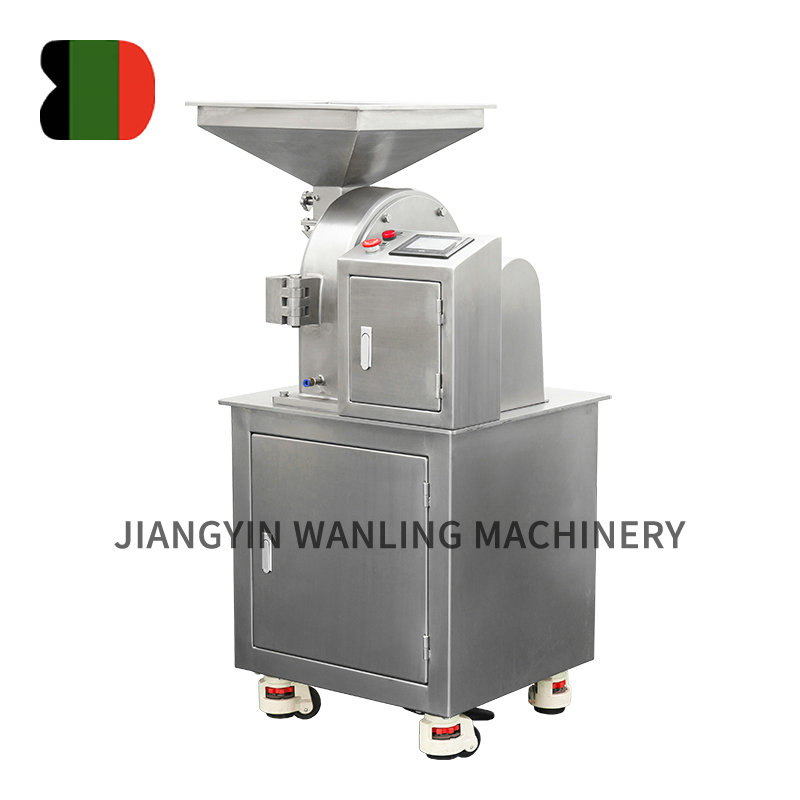
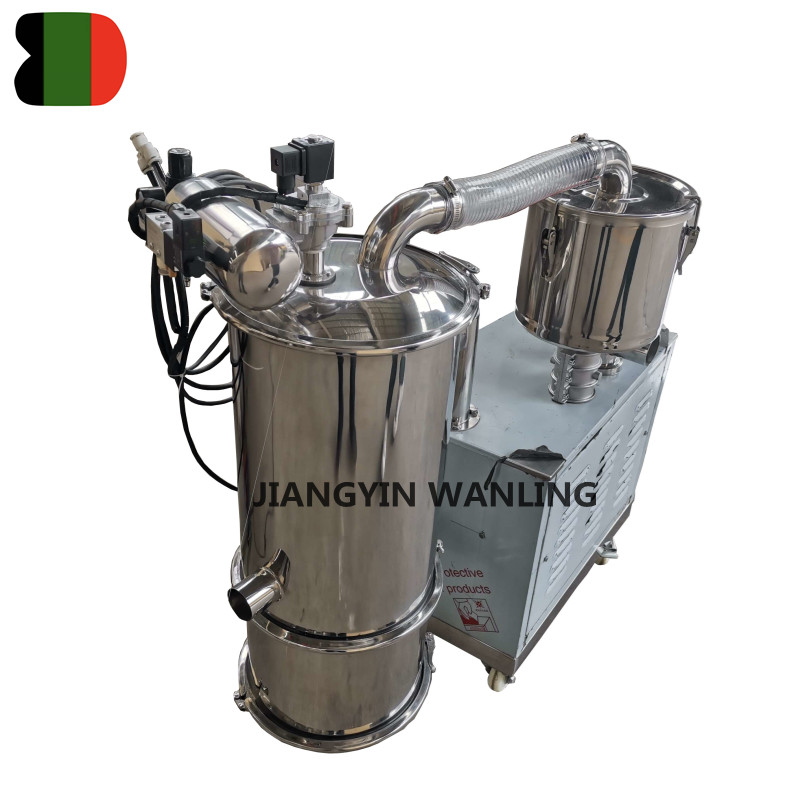 Custom Industrial ZKS Stainless Steel Food Powder Vacuum Conveyor Manufacturers,Jiangyin Wanling Factory is China custom industrial ZKS Stainless Steel Food Powder Vacuum Conveyor manufacturers and Suppliers, The ZKS ...View Product →
Pharmaceutical Production
In pharmaceutical production, containment is the central concern. Active pharmaceutical ingredients and excipients must not escape into the workspace, and one batch must not contaminate the next. Vacuum conveying with sealed connections and easy-to-clean receivers supports both operator safety and batch integrity. Granules that come out of a rapid mixer granulator can be transferred gently, without breakage, which preserves particle size distribution.
Chemical Industry
In chemical plants, the challenge is often the material itself. Abrasive fillers, dense granules, and slightly sticky compounds punish weak systems. Here, material selection matters more than automation level: thicker pipe walls, wear-resistant bends, and robust discharge valves extend service life. For fine, dusty powders, a fine powder vacuum conveyor with automatic filter cleaning keeps pickup stable and reduces maintenance stops. For powders with combustible dust risk, discuss ATEX-rated components with your supplier before finalizing the design.
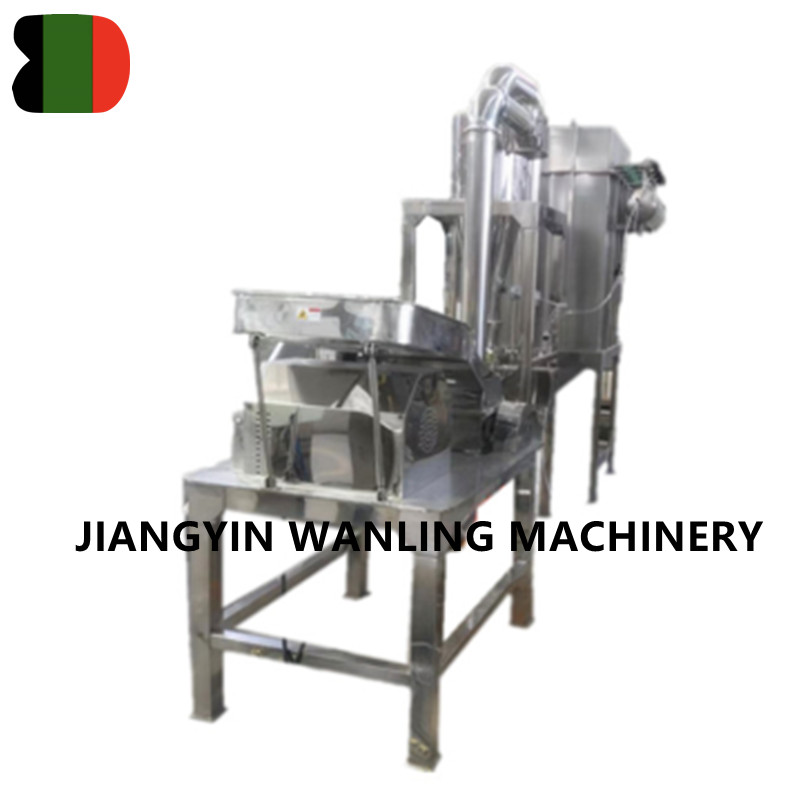
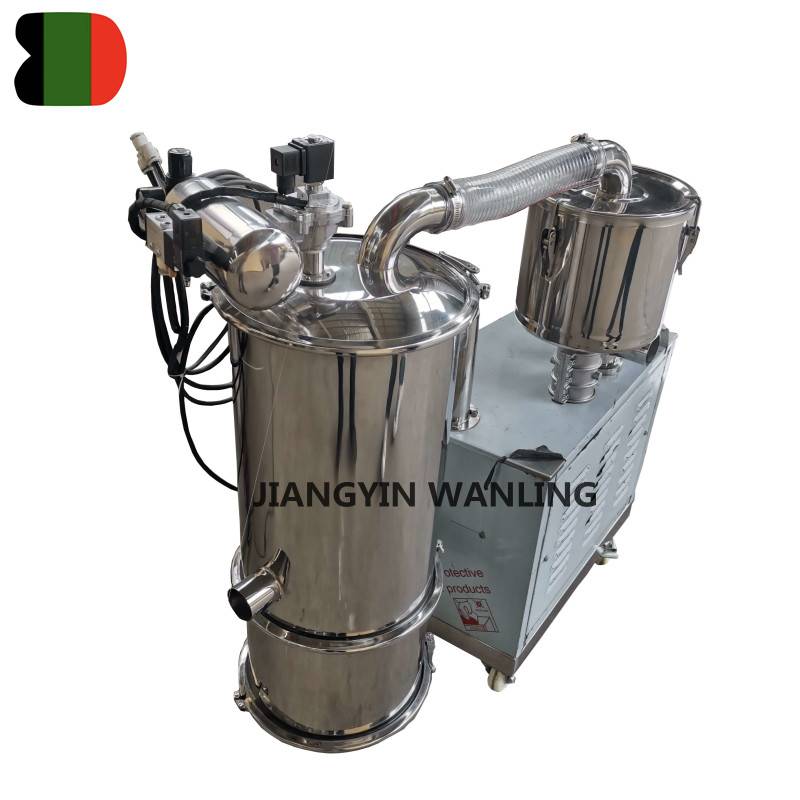 Custom Industrial ZKS Fine Powder Vacuum Conveyor Manufacturers, Suppliers - JiaJiangyin Wanling Factory is China custom industrial ZKS Fine Powder Vacuum Conveyor manufacturers and Suppliers, The ZKS vacuum feeder us...View Product →
If you are still evaluating whether the upgrade is worth it, our guide to how a fine powder vacuum conveyor can transform an automated production line breaks down the practical gains in throughput, dust control, and labor that other processors have achieved.
What to Check Before You Buy
Buyers who regret a vacuum conveying purchase usually skipped one of these checks:
- Bulk density and flowability. A system sized for free-flowing granules may struggle with a cohesive powder that bridges in the pickup point. Test your actual material, not a similar one.
- Particle size and abrasiveness. Fine powders clog filters faster; angular particles wear out bends and valves. Both facts change the design.
- Conveying distance and routing. Vertical lifts and long horizontal runs increase the vacuum demand. Count every elbow; each one adds resistance.
- Moisture and temperature. Sticky or heat-sensitive materials need special consideration, including possible cooling of the conveying air.
- Filter cleaning method. Automatic reverse-pulse cleaning keeps the system productive. A manually cleaned filter is a maintenance trap.
- Discharge interface. The conveyor is only as good as what sits below it. Confirm that the discharge valve matches your blender, sifter, or packing machine inlet.
- Material of construction. SS304 works for many dry foods; SS316 or higher is better for acidic, salty, or chemically aggressive products. Confirm surface finish and weld quality if you are in food or pharma.
A simple rule: gather at least three data points for the material you will convey, bulk density, particle size distribution, and flowability. Send those numbers to the equipment supplier and ask for a conveying test if the material is unusual. Most reputable manufacturers can run a small-scale trial to verify pickup, throughput, and filtration behavior.
Common Mistakes That Shorten System Life
Even well-built systems fail early when installation and operation ignore basic physics:
- Oversized vacuum source, undersized filter. More suction without enough filter area just packs dust into the filter faster.
- Long horizontal runs with too little air velocity. Powder settles at low velocity; too high velocity erodes pipe walls. Keep conveying velocity in the 18-25 m/s range for typical food powders, and adjust for material density.
- Ignoring the air inlet. The pickup point needs a controlled air inlet, or the material feed becomes erratic and the line may choke.
- Neglecting routine filter checks. A clogged filter cuts conveying rate long before it becomes visible as a lost production hour.
- Skipping spare parts. Discharge valves and filter cartridges are wearing parts. Keep spares on site; the cost of an unexpected stop is usually far higher than the part itself.
The Bottom Line
Heavy duty vacuum conveying is not a new technology, and that is exactly why it is trustworthy. It has been moving abrasive, dusty, and dense materials in food, pharmaceutical, and chemical plants for decades. The systems that work best are not the most expensive ones; they are the ones sized against real material behavior, with enough filter area, a vacuum source matched to the actual pipe route, and a discharge arrangement that fits the downstream process.
If your line still relies on manual powder transfer, start the evaluation with your hardest-to-handle material. Measure its density, watch how it flows, and note where dust escapes today. Those observations will tell you more about the right heavy duty vacuum conveying system than any specification sheet. And when you compare suppliers, ask how they will test your material, what filter life they guarantee, and which components are certified for your dust class. The answers separate a conveyor that works on paper from one that works on your floor.