

 Español
Content
- 1 Understanding OEM/ODM Dryer Machine Manufacturing
- 2 Types of Dryer Machines Offered by OEM/ODM Suppliers
- 3 Key Criteria for Evaluating OEM/ODM Dryer Machine Suppliers
- 4 Customization Capabilities: What OEM/ODM Partners Should Offer
- 5 Why Choose a Chinese-Based OEM/ODM Dryer Machine Manufacturer
- 6 Step-by-Step: How to Start a Cooperation with an OEM/ODM Dryer Supplier
- 7 Conclusion: Finding the Right OEM/ODM Dryer Machine Supplier
Understanding OEM/ODM Dryer Machine Manufacturing
A dryer machine is not a commodity—your product’s quality, regulatory compliance, and production cost depend on partnering with a manufacturer that understands your industry. In the drying equipment market, the difference between OEM and ODM determines how much control you have over the design and functionality of the machine that will process your materials every day.
OEM (Original Equipment Manufacturing) means you provide precise specifications, and the manufacturer builds exactly to your design. ODM (Original Design Manufacturing) means the manufacturer offers an existing design that can be adapted to your requirements. Both models work, but the real advantage lies in working with a supplier that owns its production facility. A factory-based partner eliminates communication lags between third-party trading offices and subcontractors, reduces lead times, and gives you direct access to engineering expertise.
Our operation is built on a self-owned factory in Jiangyin, China, where we design and assemble every dryer machine under one roof. This structure makes it possible to turn around custom requests quickly, whether you need a minor material change or a completely tailored configuration. For procurement teams, that translates into fewer intermediaries, transparent quality control, and a partner you can audit directly.
Types of Dryer Machines Offered by OEM/ODM Suppliers
The right drying technology depends on the physical form of your material, its heat sensitivity, and the required throughput. An experienced OEM/ODM supplier should offer a cross-section of dryer types so you never have to force a process into the wrong equipment. Here are the most common industrial categories and where they perform best.
Fluid Bed Dryers
Fluid bed dryers suspend wet particles in a stream of hot air, creating intense heat and mass transfer. They are ideal for granules, powders, and small crystals that can be fluidized without degradation. In pharmaceutical and chemical production, this technology shortens drying cycles while maintaining uniform moisture content. Our range includes models suitable for batch and continuous operation, with options for explosion-proof construction when handling volatile solvents. For a detailed look at the category, see our fluid bed dryer machines. One high-performance example is our vertical fluid bed dryer for powder, which combines efficient particulate fluidization with rapid drying, even for fine chemical and food powders.
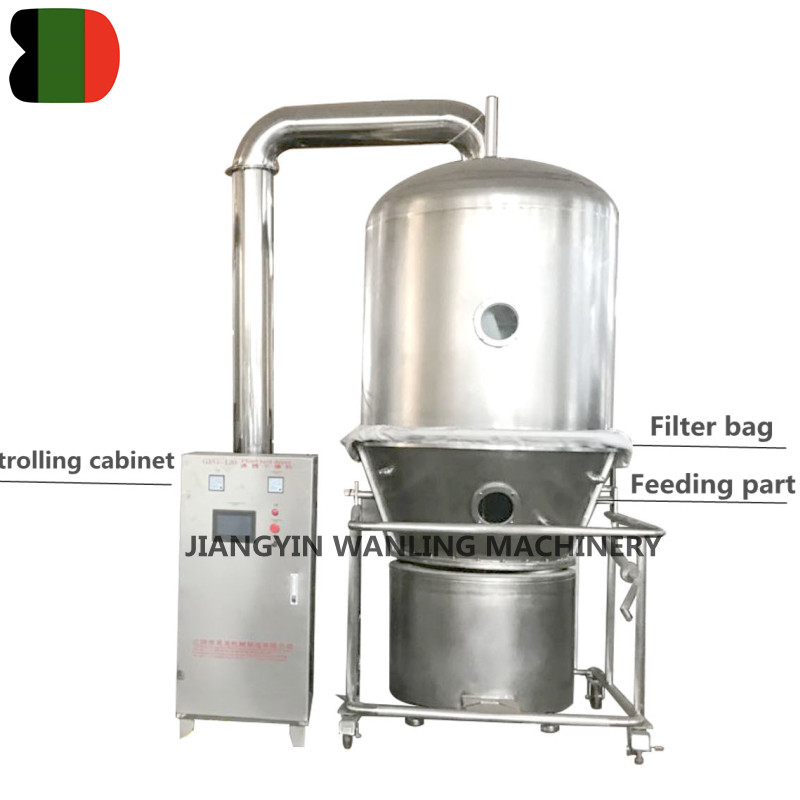 Custom Industrial GFG vertical plastic fluid bed dryer drying machine ManufacturJiangyin Wanling Factory is China custom industrial GFG vertical plastic fluid bed dryer drying machine manufacturers and Suppliers, GFG ...View Product →
Hot Air Tray Dryers
When you need to dry sliced vegetables, fruits, herbs, or other static-layered materials, hot air tray dryers are the workhorse solution. They direct heated air over trays loaded with product, allowing gentle moisture removal without mechanical stress. Temperature uniformity and tray loading density are critical for avoiding case hardening. Our tray dryers are built with stainless steel interiors and adjustable airflow systems that support drying of sensitive materials like mushrooms or leafy herbs. Explore our hot air tray dryers. A reliable configuration for many food processors is our hot air tray dryer for vegetables, engineered to deliver consistent batch drying with straightforward operation and easy cleaning.
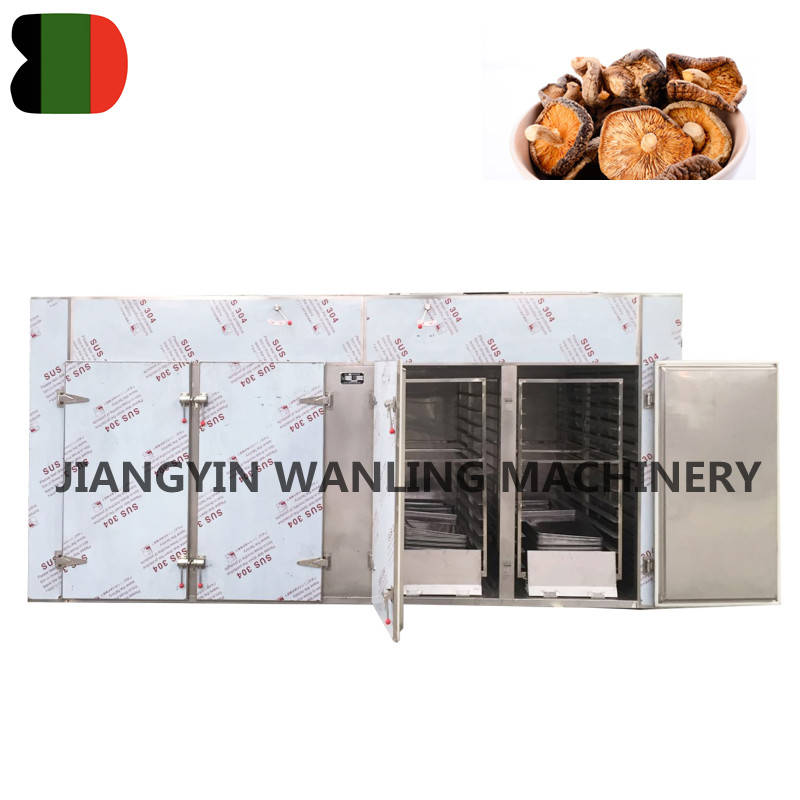 Custom Industrial CT fruit drying machine factory Manufacturers, Suppliers - JiaJiangyin Wanling Factory is China custom industrial CT fruit drying machine factory manufacturers and Suppliers, The fruit drying machine...View Product →
Vacuum Tray Dryers & Double Cone Vacuum Dryers
Heat-sensitive and easily oxidized materials—think pharmaceutical intermediates, fine chemicals, or high-value botanical extracts—require drying under reduced pressure. Vacuum tray dryers lower the boiling point of water, enabling low-temperature drying that preserves active ingredients. Double cone vacuum dryers add a rotating vessel that tumbles the powder, preventing hot spots and clumping. The combination of vacuum and gentle motion makes them essential for GMP environments. Browse our vacuum tray dryers. For rotary drying under vacuum, our rotary double cone vacuum dryer provides uniform, low-temperature drying for heat-sensitive powders, with complete discharge and easy cleanability for multiple product campaigns.
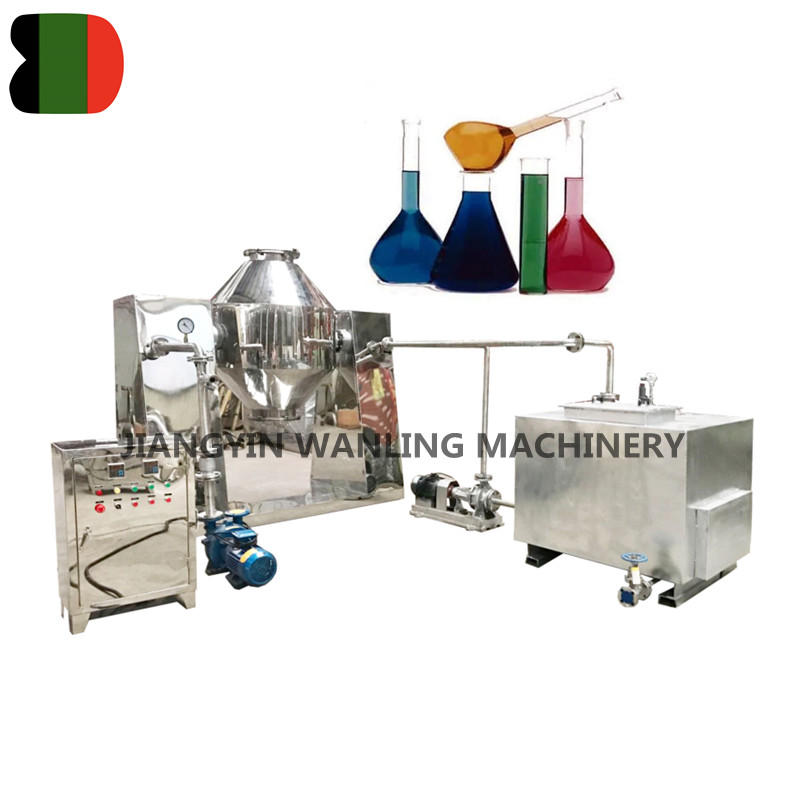 Custom Industrial SZG double cone vacuum drying machine Manufacturers, SuppliersJiangyin Wanling Factory is China custom industrial SZG double cone vacuum drying machine manufacturers and Suppliers, The double cone va...View Product →
Belt Dryers & Spray Dryers
For continuous, high-volume production lines, belt dryers and spray dryers offer throughput that batch equipment cannot match. Belt dryers convey material through temperature-controlled zones, suitable for vegetable pieces, extruded products, or chemical granules. Spray dryers atomize liquid feed into a hot drying chamber, instantly producing fine powders—the standard for dairy powders, instant coffee, and ceramic precursors. We supply both technologies, with conveyor belt dimensions and spray atomization configurations matched to your capacity targets. Review our belt dryers and spray dryers to compare specifications.
Key Criteria for Evaluating OEM/ODM Dryer Machine Suppliers
Before you commit to a supplier, you need a clear set of evaluation yardsticks. Surface-level promises are easy to make; documented capabilities are harder to fake.
First, verify the manufacturing base. A supplier that owns its factory can guarantee process control and faster reaction to changes, while a trading company adds an extra layer of coordination that often delays customization. We encourage you to learn more about our factory, where you can see the production floor, testing areas, and quality management system that support every order.
Second, examine industry experience. A manufacturer that has delivered dryers for food, pharmaceutical, and chemical sectors understands the distinct requirements of each—hygienic design for food, GMP compliance for pharma, and corrosion resistance for chemicals. Third, insist on clear documentation of materials and build quality. Contact parts should be stainless steel (SS304 or SS316L), welding must be continuous and crevice-free, and any seal materials must be compatible with your product. Fourth, ask about certifications such as ISO 9001, and request evidence of adherence to GMP or FDA guidelines where applicable. Fifth, assess production capacity and typical lead times, including the ability to provide commissioning support and spare parts. A reliable partner will also offer remote or on-site installation assistance to minimize downtime.
Customization Capabilities: What OEM/ODM Partners Should Offer
A capable OEM/ODM dryer manufacturer does more than adjust dimensions. True customization touches every functional layer of the machine, from heating method to automation architecture.
Start with the heat source—electric, steam, or thermal oil—and its integration with your plant utilities. Next, specify the temperature control range and accuracy; many pharmaceutical processes require deviation within ±1°C. Infeed and outfeed systems can be adapted to interface with your existing conveyors, and cleaning-in-place (CIP) options can be integrated for rapid product changeover. Automation is another critical area: PLC-based controls with recipe management and data logging are now standard in regulated environments, and you should expect full documentation of electrical schematics and instrumentation.
Materials dictate longevity. For corrosive or ultra-hygienic applications, 316L stainless steel throughout product-contact areas is a common requirement, while non-contact parts can be SS304. When you communicate your specifications to us, we map every requirement to an engineering drawing before procurement begins, so there are no surprises at factory acceptance testing.
Why Choose a Chinese-Based OEM/ODM Dryer Machine Manufacturer
Cost efficiency is often the first reason buyers look toward Chinese manufacturers, but the real advantage is supply-chain depth and export logistics. Our factory occupies a location with convenient water, road, and air transport access, just a short distance from Shanghai port. That geographic position shortens container loading times and reduces inland freight costs—a detail that matters when you are importing heavy machinery.
Equally important, Chinese manufacturers with dedicated R&D and engineering teams can offer customization at a pace that is difficult to match in regions where dryer production is heavily modular and price-additive. We serve the food production solutions and pharmaceutical production solutions segments daily, which means our engineering team is familiar with the documentation packages, material traceability, and validation support you need for regulated markets. This experience, combined with rigorous in-house testing before shipment, helps mitigate the perceived risk of long-distance procurement.
Step-by-Step: How to Start a Cooperation with an OEM/ODM Dryer Supplier
Working with a new dryer manufacturer follows a logical progression that protects both sides and ensures the machine you receive matches your expectations.
Step 1 – Requirement Definition: Prepare a concise specification sheet covering wet material characteristics, initial and target moisture content, hourly throughput, available utilities, and regulatory standards (GMP, FDA, etc.).
Step 2 – Technical Proposal: The supplier reviews your data and returns a proposed machine configuration, P&ID, and preliminary quotation. This stage should include a discussion of customization points.
Step 3 – Sample Testing: If possible, send a representative material batch for a lab or pilot-scale drying trial. This is the most reliable way to validate cycle time, final moisture, and product quality.
Step 4 – Pilot Production: For large-scale orders, a small pre-production run in the factory verifies that the full-scale machine behaves as predicted.
Step 5 – Production & Quality Inspection: Clear milestones with inspection hold points (FAT) allow you to check build quality before shipment. Confirm packaging, shipping markings, and documentation package.
Throughout this process, a supplier that maintains transparent communication and shares real-time progress photos will make the experience far more predictable.
Conclusion: Finding the Right OEM/ODM Dryer Machine Supplier
Every hour you spend qualifying a dryer supplier before purchase can save weeks of troubleshooting after installation. Prioritize manufacturers with their own production facilities, proven cross-industry experience, and a responsive engineering team that treats your specifications as the starting point, not an upcharge. Our team is ready to review your material data and propose a custom drying solution built to your throughput and compliance requirements. Reach out to discuss your project, and we will provide a technical consultation at no cost.