

 Español
Content
- 1 What an LS Food Granule Screw Conveyor Does
- 2 Why This Conveyor Type Suits Powder and Granule Handling
- 3 Key Design Features Worth Checking Before Purchase
- 4 Matching Conveyor Specifications to Material Type
- 5 Fitting Small Batch Production Needs
- 6 Maintenance Practices That Extend Service Life
- 7 Selecting a Supplier for LS Food Granule Screw Conveyors
What an LS Food Granule Screw Conveyor Does
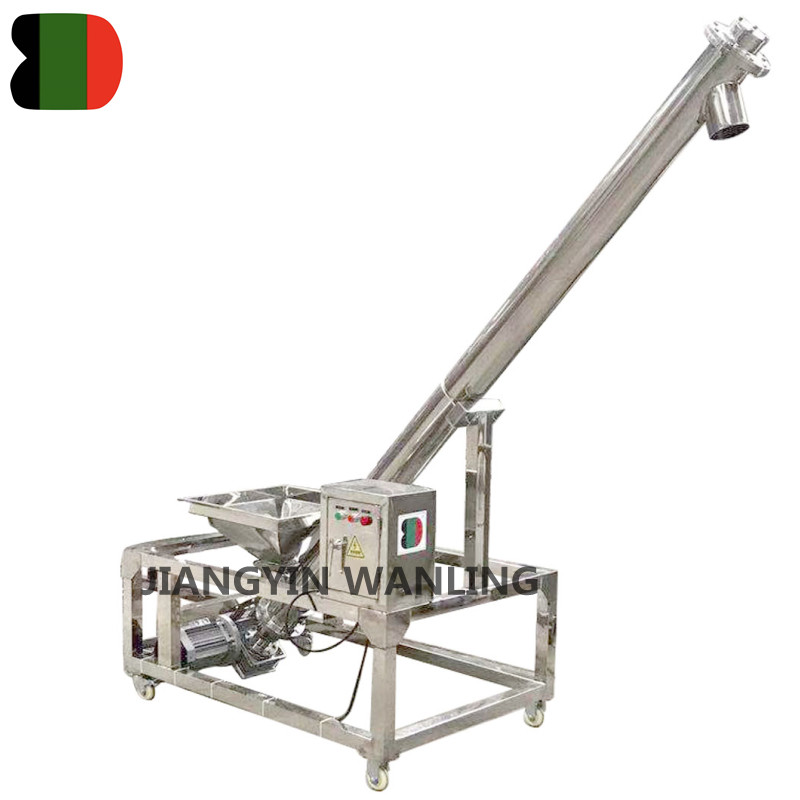
An LS food granule screw conveyor moves dry, free-flowing materials from one point to another using a rotating helical screw enclosed in a tube or trough. In food processing lines, this type of conveyor is used to transport powders and granules such as coffee powder, wheat flour, seasoning blends, starch, sugar, and similar ingredients between storage silos, mixers, packaging stations, or other processing equipment. The enclosed design keeps dust contained and protects the material from contamination during transfer, which matters when handling ingredients destined for human consumption.
The "LS" designation refers to a horizontal or slightly inclined tubular screw conveyor series widely used across food, chemical, and building material industries. For food applications specifically, the conveyor is typically built with stainless steel contact parts, sealed bearings, and smooth interior surfaces that reduce material buildup and make cleaning straightforward between production runs.
Why This Conveyor Type Suits Powder and Granule Handling
Powdery ingredients like flour and coffee powder present handling challenges that other conveying methods struggle with. Belt conveyors expose material to open air and dust loss. Pneumatic systems can generate heat or static that affects sensitive powders. A screw conveyor solves both problems by moving material through a fully enclosed housing, so there's minimal dust escape, no product exposure to outside contaminants, and consistent, controllable flow rates.
Consistent Flow Control
The screw's pitch and rotation speed determine how much material moves per minute. This makes it possible to dial in precise, repeatable output rates, which is especially useful when the conveyor feeds a batching, mixing, or filling process downstream that depends on steady material delivery.
Gentle Handling of Fine Materials
Fine powders can degrade or clump if handled too aggressively. LS conveyors are typically run at moderate speeds with screw geometry chosen to match the material's flow characteristics, reducing the risk of compaction, heat buildup, or particle breakdown during transport.
Key Design Features Worth Checking Before Purchase
Not every screw conveyor labeled "LS" is built the same way. Several design details directly affect how well the machine performs with food-grade powders and how easy it is to keep sanitary.
- Contact parts made from 304 or 316 stainless steel to resist corrosion and meet food-contact requirements
- Sealed inlet and outlet points to prevent dust leakage and outside contamination
- Removable end covers or inspection hatches for quick interior cleaning
- Variable-speed motor options for adjusting conveying rate to different product types
- Smooth-welded internal seams that avoid crevices where powder residue could accumulate
- Explosion-relief or dust-control accessories for facilities handling fine combustible powders
Reviewing these details against a facility's specific hygiene and safety standards before ordering helps avoid costly retrofits later.
Matching Conveyor Specifications to Material Type
Different powders and granules behave differently inside a screw conveyor. Flour is fine and can be prone to bridging if the screw pitch isn't right. Coffee powder can be slightly abrasive due to residual particle roughness. Condiment powders may contain small amounts of moisture that affect flow. The table below outlines general guidance for matching conveyor settings to common food materials.
| Material | Flow Characteristic | Recommended Screw Pitch |
| Wheat Flour | Fine, prone to bridging | Standard to short pitch |
| Coffee Powder | Fine, slightly abrasive | Standard pitch |
| Condiment Blends | Variable moisture, may clump | Variable pitch with ribbon option |
| Granulated Sugar | Free-flowing, low friction | Standard to long pitch |
A manufacturer familiar with these material differences can adjust screw geometry, trough diameter, and rotation speed to reduce clogging and keep throughput steady across a production shift.
Fitting Small Batch Production Needs
Not every operation runs continuous, high-volume lines. Many food producers work in small or mixed batches, switching between different powders or condiment formulas throughout the day. LS screw conveyors accommodate this well because they can be built in compact lengths and diameters, and variable-speed drives allow output to be scaled down without sacrificing consistency.
For small-batch operations, quick-clean features become especially important, since switching between different powder types often requires thorough cleaning to avoid cross-contamination or flavor transfer. Conveyors with removable screws, tool-free access panels, or CIP (clean-in-place) compatible designs reduce downtime between batches.
Maintenance Practices That Extend Service Life
Routine maintenance keeps a screw conveyor running reliably and protects product quality over time. A few practices make the biggest difference in day-to-day operation.
- Inspect bearing seals regularly to prevent lubricant or particle contamination inside the trough
- Clean the interior after each material changeover to avoid cross-contamination between products
- Check screw flighting for wear, particularly with abrasive powders, and replace worn sections before they affect throughput
- Monitor motor and gearbox temperature during extended runs to catch early signs of mechanical strain
- Verify that dust seals at inlet and outlet points remain intact to maintain a clean operating environment
Selecting a Supplier for LS Food Granule Screw Conveyors
When sourcing this equipment, it helps to look beyond the base price and evaluate the manufacturer's experience with food-grade applications specifically. A supplier with a track record in food powder handling will typically offer material certificates for stainless steel components, documented cleaning validation, and the flexibility to customize screw pitch, trough length, and drive speed to match a buyer's exact product mix. Requesting sample test runs with the actual material being conveyed, whether that's flour, coffee powder, or a proprietary condiment blend, is one of the most reliable ways to confirm the conveyor will perform as expected before committing to a full production order.