

 Español
Content
- 1 Powder Grinding Machines and Spice Grinders: What the Category Actually Covers
- 2 How Powder Grinding Machines Work: The Principal Size Reduction Mechanisms
- 3 Principal Types of Powder Grinding Machine
- 4 Grinding Machine for Spices: Material-Specific Considerations
- 5 Particle Size Distribution and Its Effect on Spice Powder Quality
- 6 Hygienic Design and Food Safety Requirements
- 7 Selecting a Powder Grinding Machine: Key Evaluation Criteria
Powder Grinding Machines and Spice Grinders: What the Category Actually Covers
A powder grinding machine reduces solid materials to fine or ultra-fine particle sizes through the application of mechanical force -- impact, compression, attrition, shear, or some combination of these. The category spans an enormous range of scales and engineering approaches, from small tabletop units used in commercial kitchens to multi-ton industrial mills processing hundreds of kilograms per hour in pharmaceutical, chemical, and food manufacturing facilities.
A grinding machine for spices sits within this broader category but brings a specific set of requirements that not all powder grinding machines can satisfy. Spices are heterogeneous in their physical properties -- some are hard and dry (black pepper, cumin seed), others are oily or moisture-bearing (turmeric, paprika, cardamom), and some are fibrous or contain cell structures that release volatile aromatic compounds under mechanical stress. The ideal grinding machine for spices must handle this variation while controlling particle size distribution, minimizing heat generation that would drive off essential oils, and producing finished powder that meets food safety and hygiene standards.
Understanding the engineering differences between grinding machine types is the starting point for selecting equipment that will perform reliably across the target material range, throughput requirement, and finished powder specification.
How Powder Grinding Machines Work: The Principal Size Reduction Mechanisms
All powder grinding machines reduce particle size through one or more of four fundamental mechanisms. The dominant mechanism in a given machine type determines which materials it grinds most effectively, what particle size distribution it produces, and what limitations it has.
Impact
Impact grinding uses high-velocity collision between particles and a rigid surface -- hammer tips, pins, or a grinding track -- to fracture material through sudden force application. Impact is most effective on brittle, dry materials that fracture cleanly under rapid loading. Most hammer mills and pin mills operate primarily by impact. The high rotor speeds involved generate significant frictional heat, which limits the suitability of impact-dominant machines for heat-sensitive, high-oil, or high-moisture materials without cooling provisions.
Attrition
Attrition grinding generates size reduction through rubbing and shearing forces between surfaces moving relative to each other -- between rotating and stationary discs, between grinding stones, or between particles themselves in a stirred media mill. Attrition is effective on materials that do not fracture cleanly under impact, including fibrous spices and soft, cohesive powders. Disc mills, stone mills, and colloid mills all operate primarily through attrition and are well-suited to producing fine, homogeneous powders from a wider range of spice types than impact-only machines.
Compression
Compression grinding applies force progressively to the material between two surfaces, fracturing it when the applied stress exceeds the material's compressive strength. Roller mills and jaw crushers operate by compression. For spice grinding, compression is typically applied in pre-grinding or coarse reduction stages rather than as the primary fine grinding mechanism, as it is less effective at producing the fine particle sizes (typically 100 to 500 microns) required for finished spice powders.
Jet and Fluid Energy Milling
Jet mills (fluid energy mills) use high-velocity jets of compressed air or steam to accelerate particles against each other and against a grinding ring, producing size reduction entirely through particle-to-particle and particle-to-wall impact at supersonic velocities. Because no mechanical rotor is involved and the expanding gas provides cooling, jet mills generate minimal heat -- making them suitable for ultra-fine grinding of heat-sensitive materials. Jet mills are the preferred technology for pharmaceutical-grade powder grinding and for spice and botanical extracts where essential oil preservation is critical, but they are significantly more expensive in capital and operating cost than mechanical mills.
Principal Types of Powder Grinding Machine
Within these four mechanisms, a range of specific grinding machine designs has been developed for different material types, particle size targets, and throughput scales. The following represent the types most relevant to food and spice powder production.
Hammer Mill
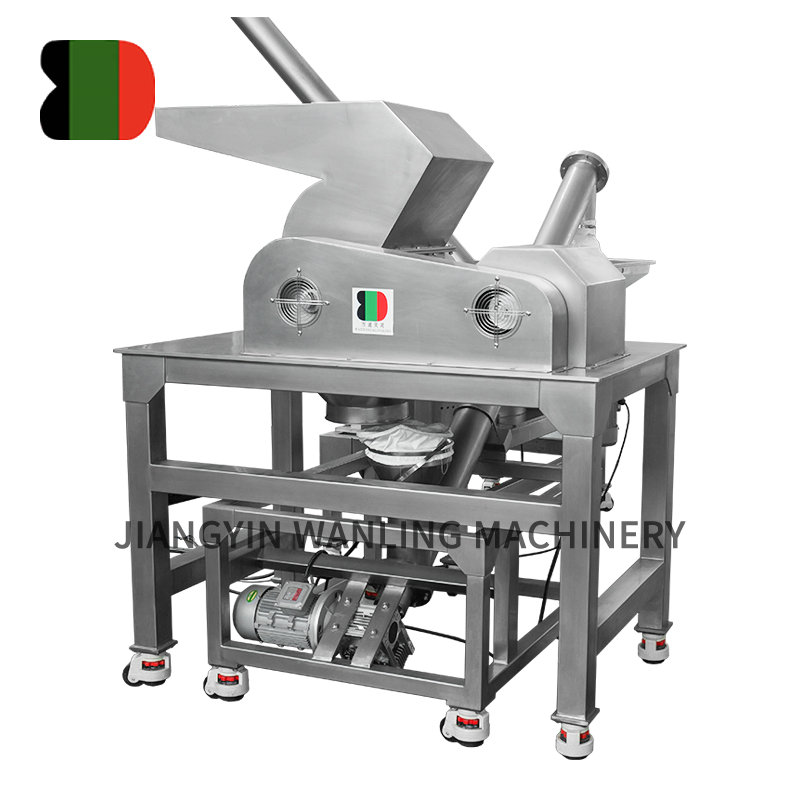
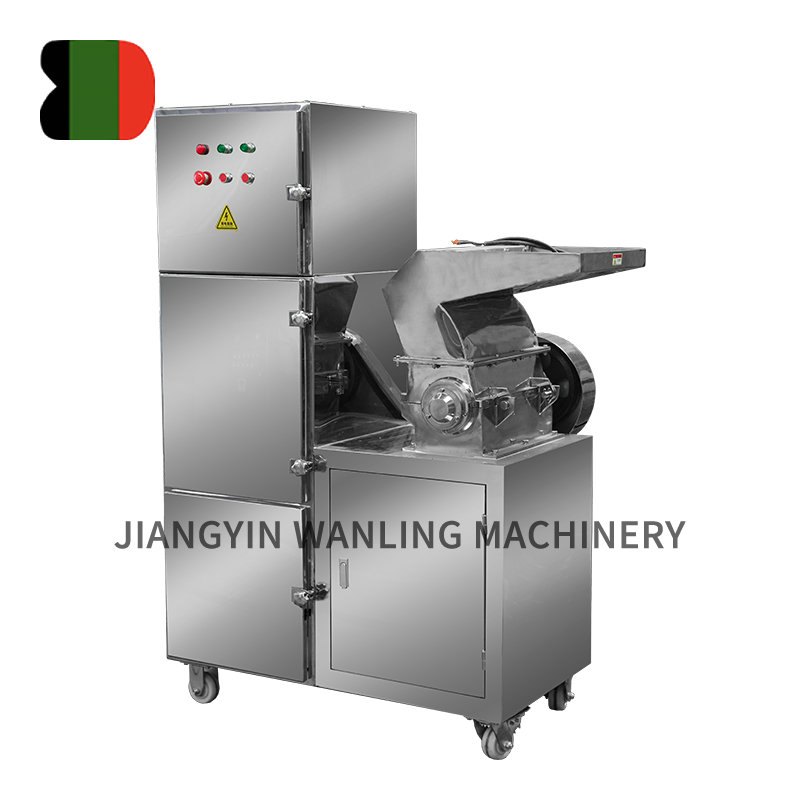
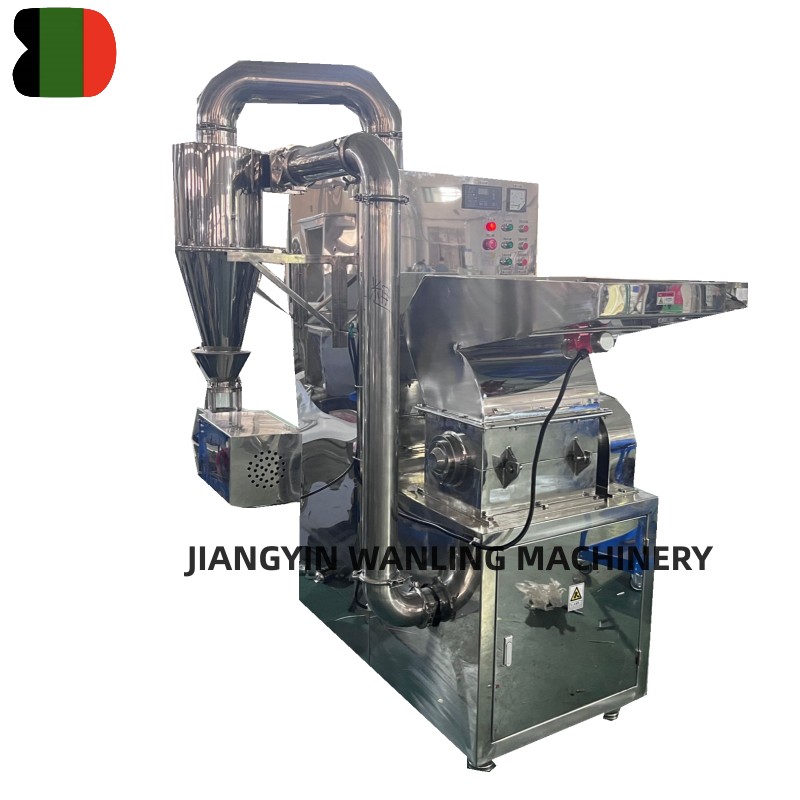
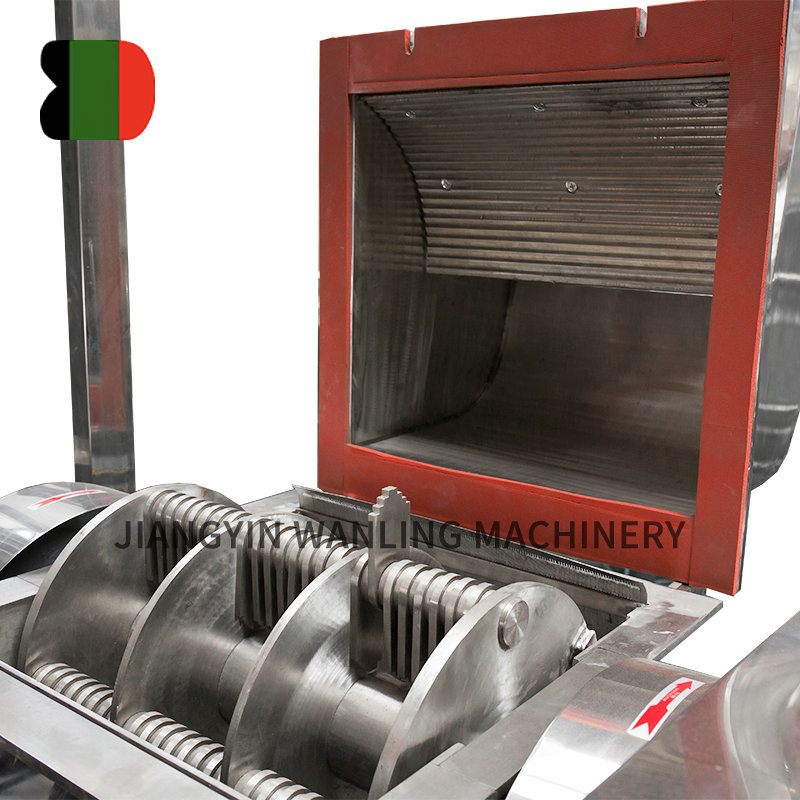
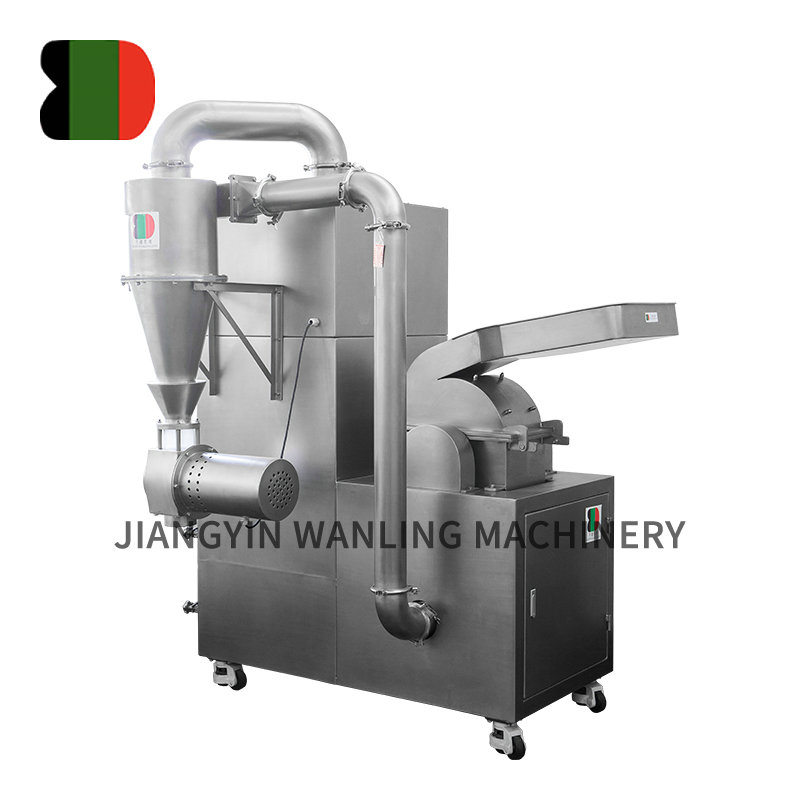
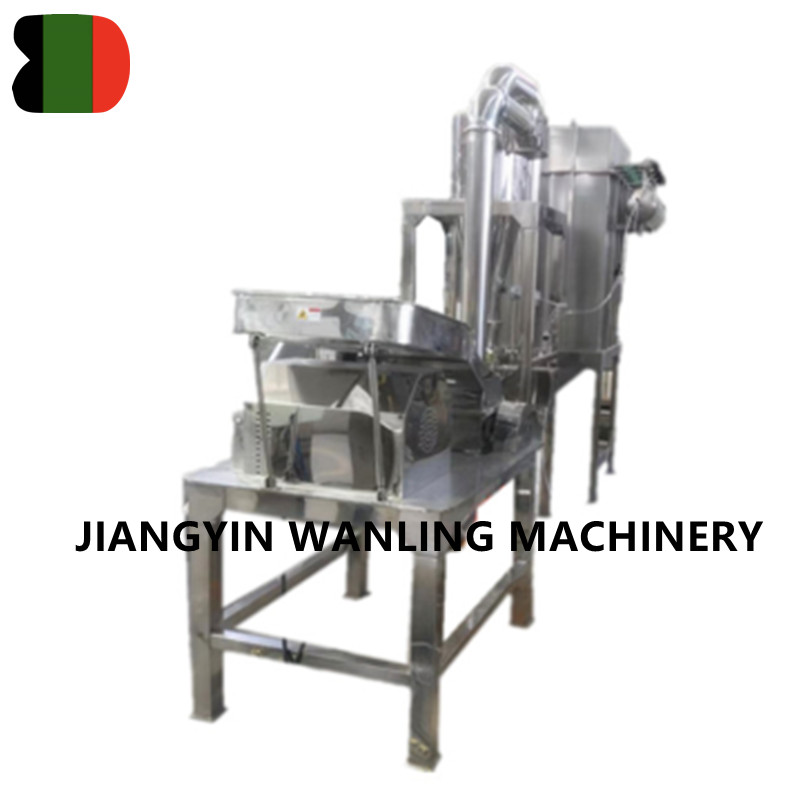
The hammer mill is the most widely used powder grinding machine in food and spice processing at commercial and industrial scale. A rotating shaft carries a series of freely swinging or rigid hammers that impact the feed material at high velocity. A perforated screen surrounds the grinding zone; material passes through the screen only when it has been reduced below the aperture size, providing a degree of particle size control.
Hammer mills are robust, relatively low-cost, and capable of high throughput on a wide range of dry spices. Their primary limitations for spice grinding are heat generation at high rotor speeds and the tendency to produce a broad particle size distribution rather than a narrow, controlled output. For premium spice powders where color, aroma, and consistent particle size are critical quality parameters, hammer mills may require integration with air classification or cooling systems to meet specification.
Pin Mill
A pin mill (disc pin mill or beater mill) uses two counter-rotating discs carrying concentric rings of pins. Material fed through the center of the disc assembly is subjected to repeated high-velocity impacts as it migrates outward through successive pin rings. Pin mills operate at higher peripheral velocities than hammer mills and produce finer, more uniform particle size distributions, making them a common choice for fine grinding of dry spices, dried herbs, and food powders. The close tolerances between opposing pin rows require that feed material be pre-dried to a consistent moisture content, as wet or clumping feed causes pin wear and inconsistent output.
Disc Mill (Burr Mill)
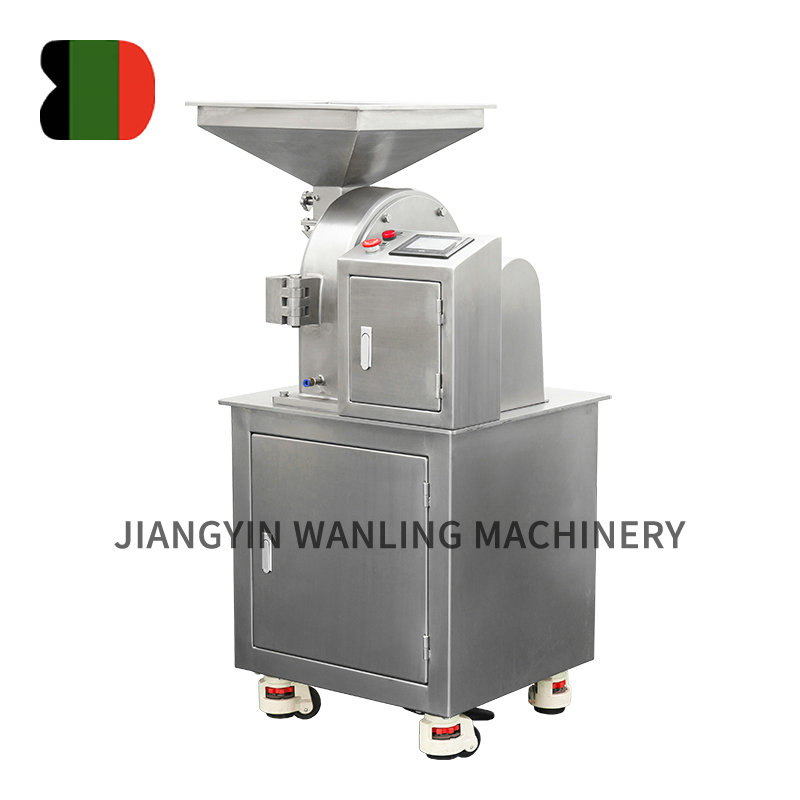
Disc mills use one rotating and one stationary abrasive disc between which the feed material is drawn by centrifugal force and ground progressively finer as it moves from the center to the periphery. The gap between the discs is adjustable, providing direct control over output particle size. Disc mills produce size reduction primarily through attrition and shear, making them effective on both brittle and fibrous spice types. They generate moderate heat and are widely used in commercial spice blending and powder production at small to medium scale. Stone disc mills (flour mills with abrasive stone discs rather than metal) are the traditional equivalent and are used in artisan and specialty spice production where the grinding stone material is considered to affect flavor profile.
Universal Mill
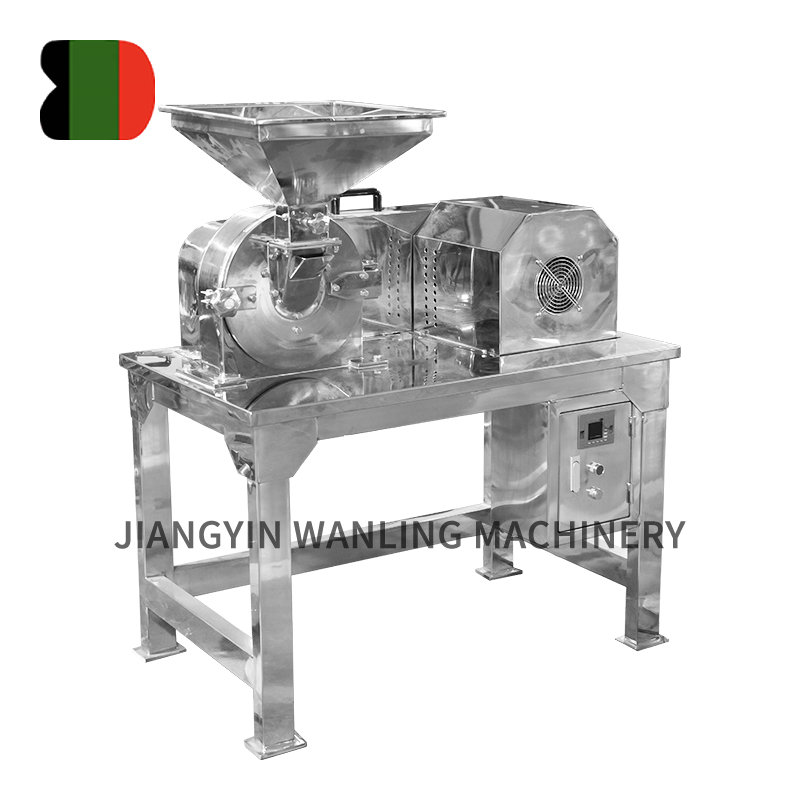
Universal mills combine multiple grinding mechanisms -- impact from beater elements, attrition from a grooved stator track, and shear from high-velocity airflow through the grinding zone -- in a single unit. The interchangeable grinding elements (various beater profiles, screen apertures, and stator configurations) allow the same machine to be configured for coarse, medium, or fine grinding of a wide range of materials. Universal mills are favored in pilot-scale and multi-product processing facilities where flexibility across different spice types and fineness requirements is valued over maximum throughput on a single product.
Cryogenic Grinding System
Cryogenic grinding (also called cryo-milling) uses liquid nitrogen to pre-cool or continuously cool the feed material to temperatures well below zero degrees Celsius before and during grinding. At cryogenic temperatures, the cell walls of spice tissues become brittle and fracture more cleanly under impact, reducing the energy required for size reduction and -- critically -- preventing the generation of frictional heat that would volatilize essential oils. Cryogenic grinding of heat-sensitive spices such as cardamom, cinnamon, cloves, and black pepper consistently produces powders with significantly higher volatile oil retention, more vibrant color, and longer shelf life compared to ambient-temperature grinding of the same materials. The capital and operating cost of a cryogenic grinding system is substantially higher than conventional ambient grinding, but the quality premium on the finished powder typically justifies this investment in premium spice production.
Jet Mill
As described above, jet mills use compressed gas acceleration to achieve ultra-fine particle sizes (typically 1 to 50 microns) without rotor contact or heat generation. In the spice and botanical industry, jet mills are used for grinding spice oleoresin-coated carriers, botanical extracts, and specialty functional ingredients where ultra-fine particle size or strict temperature control is required. The technology is also the standard for pharmaceutical powder grinding where particle size distribution directly affects bioavailability and dose uniformity.
| Machine Type | Primary Mechanism | Typical Output Particle Size | Heat Generation | Best Suited For |
|---|---|---|---|---|
| Hammer mill | Impact | 100 to 800 microns | Moderate to high | Hard, dry, brittle spices at high throughput |
| Pin mill | Impact | 50 to 400 microns | Moderate | Fine, uniform powder from dry spices |
| Disc mill | Attrition | 100 to 600 microns | Low to moderate | Brittle and fibrous spice types |
| Universal mill | Impact and attrition | 50 to 1,000 microns | Moderate | Multi-product, flexible processing |
| Cryogenic mill | Impact (at low temperature) | 50 to 500 microns | Minimal (actively cooled) | Heat-sensitive, high-oil spices |
| Jet mill | Particle-to-particle impact | 1 to 50 microns | None | Ultra-fine, heat-sensitive, pharmaceutical-grade |
Grinding Machine for Spices: Material-Specific Considerations
Spices present a wider range of physical grinding challenges than most other food powders. A grinding machine that performs excellently on black pepper may be entirely unsuitable for chili or cardamom. The following material properties are the primary drivers of machine selection and operating parameter optimization for spice grinding.
Moisture Content
Moisture content is the most critical pre-grinding quality parameter. Most spices must be dried to a moisture content below 10% -- and ideally below 8% -- before entry into a fine grinding machine. Above this threshold, particles tend to clump and coat grinding surfaces rather than fracturing cleanly, reducing throughput, causing screen blinding in hammer mills, and producing inconsistent particle size distribution. Pre-drying to a consistent, controlled moisture level is a standard upstream step in all industrial spice powder operations.
Oil Content and Heat Sensitivity
Many of the most commercially important spices have significant essential oil or fixed oil content -- cardamom (3 to 8% essential oil), cloves (15 to 20%), cinnamon (0.5 to 4%), black pepper (2 to 4%), and turmeric (3 to 7% curcumin with associated oils). Grinding heat drives these volatile compounds into the gas phase, resulting in aroma loss, color change, and a reduction in the potency of the finished powder. The relationship between grinding temperature and volatile oil retention is well-established: for every 10 degree Celsius increase in grinding temperature above ambient, volatile oil losses in impact-ground spices increase by approximately 5 to 15% depending on the specific compound. Cryogenic grinding or forced-air cooling of the grinding chamber are the primary engineering responses to this challenge at industrial scale.
Hardness and Abrasiveness
Hard spices with high silica or mineral content -- turmeric, ginger, and some seed spices -- are abrasive to grinding surfaces and cause accelerated wear of hammer tips, pins, and disc faces. Wear-resistant materials (hardened tool steel, ceramic-coated grinding elements) and increased maintenance intervals are required for continuous processing of abrasive spice types. The cost of wear part replacement should be factored into the total cost of ownership evaluation for any grinding machine intended for abrasive spice applications.
Fibrous and Cellular Structure
Fibrous spices -- dried chili, paprika, star anise, dried ginger -- resist impact-dominant grinding because the fiber network absorbs impact energy elastically rather than fracturing. These materials grind more effectively in attrition-dominant machines (disc mills, stone mills) where repeated shearing separates fibers progressively, or in machines with both impact and cutting elements. A common approach is pre-cutting in a coarse granulator before fine grinding in a hammer or disc mill, reducing the aspect ratio of the fibrous particles to a size that responds effectively to impact.
Dust Explosion Risk
Fine organic powders -- including all spice powders -- are potentially combustible when suspended in air at concentrations above the minimum explosible concentration (MEC). Spice powders are classified as dust explosion hazards (St-1 to St-2 class in most assessments), requiring that grinding machines and associated dust collection systems be specified and installed in compliance with relevant explosion protection standards (ATEX in the European Union, NFPA 654 and 61 in North America). Explosion venting, suppression systems, and rotary airlock isolation between the grinder and the dust collection system are standard protective measures in food powder processing facilities handling spices at industrial scale.
Particle Size Distribution and Its Effect on Spice Powder Quality
Particle size is not a single value but a distribution -- a range of particle sizes present in the finished powder, typically characterized by D10, D50, and D90 values (the particle diameter below which 10%, 50%, and 90% of the volume of the powder falls, respectively). The width of this distribution and the position of its median (D50) directly affect the sensory, functional, and commercial properties of the finished spice powder.
A narrower particle size distribution -- achieved through classification (screening or air classification) after grinding rather than grinding alone -- produces a more consistent flavor release rate, better flow and packaging behavior, and a more uniform appearance. Air classification integrated with the grinding circuit allows oversize particles to be continuously returned to the mill for regrinding while correctly-sized product exits the system, producing a tighter distribution without multiple grinding passes that would generate excessive heat.
Typical particle size targets for commercial spice powders range from 150 to 400 microns (passing 40 to 100 mesh) for standard culinary grades, down to 75 microns (200 mesh) and below for fine culinary applications and food industry ingredient use. Ultra-fine spice powders for encapsulation or pharmaceutical applications may target D50 values below 30 microns, requiring jet milling or wet media milling rather than conventional dry mechanical grinding.
Hygienic Design and Food Safety Requirements
Grinding machines for spices used in food production must meet hygienic design standards that are substantially more demanding than general industrial powder processing equipment. The key principles that govern hygienic grinding machine design for food applications are:
- Food-grade materials of construction: All surfaces in contact with spice material must be fabricated from food-grade stainless steel (typically 304 or 316L grade), food-approved polymers, or ceramic. Bare cast iron and carbon steel are not acceptable in food contact zones due to corrosion and contamination risk.
- Cleanability: Internal surfaces must be smooth, free of crevices, threads, and dead zones where product can accumulate and harbor microbial growth. Quick-release fasteners, removable internals, and access panels that allow complete interior cleaning and inspection without tools are standard requirements in modern hygienic design.
- Seal integrity: Shaft seals must prevent product ingress into bearing housings (a common contamination and maintenance problem in older grinding machine designs) and must themselves be cleanable and replaceable without specialist tooling.
- Foreign body risk control: Grinding machines for spices require metal detection or magnetic separation upstream to remove metallic contaminants before they enter the grinding zone, where they would damage grinding surfaces and create metal particle contamination in the finished powder.
- Allergen management: In multi-product spice processing facilities, the grinding machine must be capable of complete cleanout between runs of allergen-containing and allergen-free materials. The cleanout protocol and the machine's design must be validated to demonstrate allergen reduction to safe residue levels.
Selecting a Powder Grinding Machine: Key Evaluation Criteria
For buyers, plant engineers, and product development teams evaluating powder grinding machine options for spice or food powder applications, the following framework covers the parameters that most directly determine whether a machine will meet production requirements:
- Target particle size and distribution: Define the required D50 and maximum acceptable D90 for the finished powder. This determines the feasible machine type range before any other parameter is considered. A target D50 below 30 microns eliminates mechanical impact mills as primary grinders; a target of 200 to 400 microns places hammer and disc mills within the feasible set.
- Material physical properties: Characterize the feed material's moisture content, oil content, hardness, fiber content, and bulk density. Request that machine suppliers conduct material trials on representative feed samples before equipment specification is finalized -- grinding behavior cannot be reliably predicted from material data sheets alone.
- Required throughput: Specify the target production rate in kilograms per hour and the operating schedule (continuous, batch, or campaign). Match machine sizing to the throughput requirement with appropriate capacity margin (typically 20 to 30% above the target rate) to accommodate feed variation and planned maintenance downtime.
- Heat sensitivity of the material: If the feed material contains significant volatile or heat-labile components, specify the maximum acceptable temperature rise in the grinding zone and request data from the machine supplier on typical temperature rise at the target throughput and screen size. Consider forced-air cooling or cryogenic pre-cooling if the standard machine cannot meet the temperature requirement.
- Cleanability and changeover requirements: Define the cleaning standard required (dry cleanout, wet cleaning to a defined microbiological standard, full CIP) and the acceptable changeover time between product runs. These requirements directly determine the machine construction standard and the design of internals and seals.
- Regulatory and certification compliance: Confirm that the machine meets applicable food safety design standards (EHEDG, 3-A Sanitary Standards, or equivalent), pressure equipment directives (if applicable), and explosion protection classifications for the dust explosion hazard category of the feed material.
- Total cost of ownership: Evaluate capital cost, installation cost, energy consumption (kWh per tonne of finished powder), wear part cost and replacement frequency, and maintenance labor requirements. For abrasive spice materials in particular, wear part cost over a three to five year horizon can exceed the initial capital cost of the machine and must be included in the evaluation.
Requesting a grinding trial at the machine supplier's facility with representative samples of the actual feed material is the single most effective step in de-risking a grinding machine procurement decision. Trial data on achieved particle size distribution, throughput rate, power consumption, and product temperature rise at the operating conditions of interest provides a direct comparison basis between competing equipment options that no specification document or sales material can replicate.