

 Español
Choosing between dense phase and dilute phase pneumatic conveying is not about finding a universally better option. The decision depends on the material you move, the distance you cover, and the quality you protect. In short, dense phase suits fragile and abrasive products that cannot tolerate high velocity, while dilute phase handles most bulk powders with simpler, often less expensive hardware. Before you configure a system, understand the operating differences that drive these outcomes.
Both systems use air pressure to push material through a pipeline, but they differ in how the material travels and in the cost of that movement. The table below summarizes the key contrasts. The rest of this guide explains each one in the context of a real purchase decision.
Content
What Is Dilute Phase Pneumatic Conveying?
Dilute phase conveying uses a high air velocity to keep particles entrained in the airflow. The material moves in suspension at speeds typically above 18 m/s (around 3,500 ft/min) and often 25–35 m/s for lighter powders. Because the volume of air is high relative to the product, the system operates at relatively low pressure and uses a simple rotary airlock or venturi to feed the line.
This method is forgiving in terms of material variety. It can convey cohesive powders, granules, and irregular shapes without needing special air injection. The trade-off is wear and product damage. At high velocity, abrasive particles erode elbows and piping; fragile materials can be crushed or broken. For many bulk powders, though, dilute phase is the most economical choice.
What Is Dense Phase Pneumatic Conveying?
Dense phase conveying moves material in slugs or plugs at a low velocity, often below 10 m/s (around 1,600 ft/min). This is achieved with a higher solid-to-air ratio and higher line pressure. The pipeline is filled more completely, and the material is pushed forward as a cohesive mass.
The main benefit is gentle handling. Because the velocity is low, abrasive materials cause far less pipe wear, and fragile components have a much lower risk of breakage. The challenge is that dense phase requires a material that can hold together as a plug, which means it works best with permeable, air-retentive, or coarse products. Fine, aerated powders may require special air injection or a different style of system.
Key Differences at a Glance
The table below gives typical operating ranges. Actual values change with material, line length, and pressure losses.
| Feature | Dilute Phase | Dense Phase |
|---|---|---|
| Air velocity | 18–35 m/s | 3–10 m/s |
| Product-to-air ratio | Low (1–5) | High (10–30+) |
| Line pressure | 0.1–0.5 bar | 0.5–2+ bar |
| Pipe wear | Higher | Lower |
| Product degradation | Higher | Lower |
| Best for | Most materials | Abrasive, fragile, high-value products |
| Distance capability | Shorter typical runs | Longer runs with less erosion |
| Typical feed system | Rotary airlock or venturi | Pressure vessel or blow pot |
How to Choose: Material, Process, and Layout
Material Properties
Start by knowing your product. Bulk density, particle size, shape, abrasiveness, friability, and moisture content all influence whether a material can be conveyed in dense phase. Permeable products like plastic pellets, grains, and some mineral powders accept plug flow well. Fine powders that are aerated and retain air may also work with dense phase if the system is designed with air injection. Sticky or cohesive powders often cause plugs to collapse, so dilute phase may be more reliable.
Process Requirements
Throughput and distance are the next factors. If you need to move 20 tons per hour over 200 meters, both systems can be designed, but the energy and pipe diameter differ. Dense phase uses more compressed air per ton and requires a pressure vessel, which raises initial cost. Dilute phase uses less pressure and simpler feeding, which can be more cost-effective for long, high-capacity runs unless the material is abrasive or fragile.
Consider also product quality. If you are conveying tablets that must not break, food ingredients that should not generate fines, or abrasive powders that will ruin a pipeline within months, dense phase is worth the extra investment. For a conventional raw powder that has no special handling requirements, dilute phase is often the more practical answer. Food production systems frequently use dilute phase for sugar, flour, starch, and similar powders.
Energy and Maintenance
Do not forget the cost of air. Dense phase systems need higher line pressure, but they often use less total air because the air volume is lower. This can reduce power consumption per ton over long distances. Maintenance also shifts: dilute phase systems will need more elbow replacements and pipe rotation, while dense phase systems need a well-designed feed vessel and more reliable air control. Ask your supplier for a total cost of ownership calculation.
Practical Considerations in Food and Powder Processing
In food and powder processing, the choice often comes down to protecting flavor, color, and particle integrity. A vacuum conveying system is a common way to transfer fine powders gently from a mill to a blender or to a packing line. Vacuum conveying typically operates in a dilute phase manner, but with an eye on low velocity to minimize degradation.
For fine powder transfer in food plants, a vacuum conveyor offers a gentle, closed conveying route. The unit below is an example of this type of equipment.
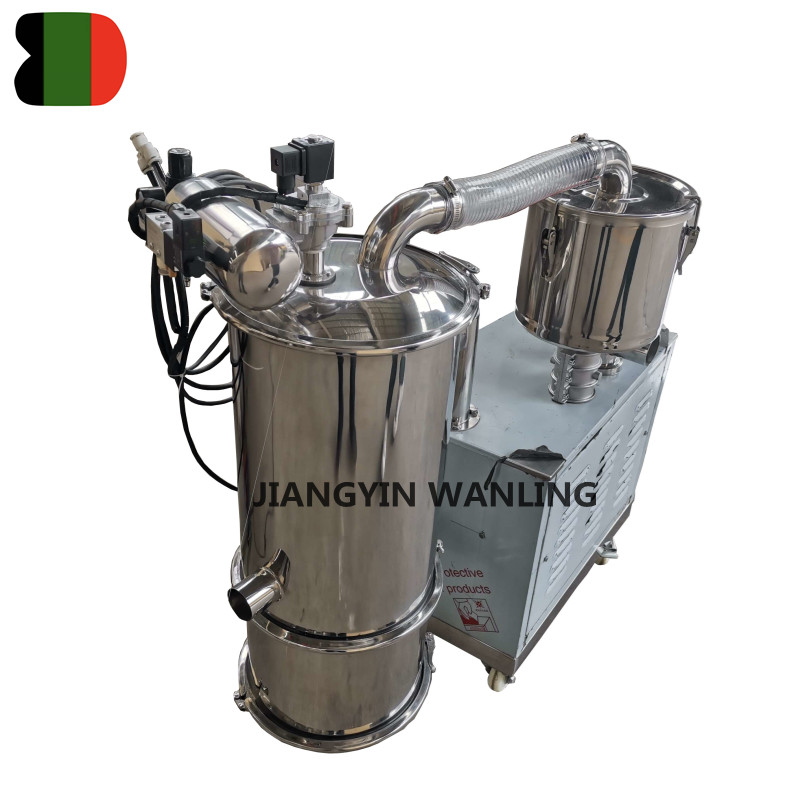 ZKS Stainless Steel Vacuum Conveyor for Food Powder TransferThis unit offers hygienic, closed conveyance for fine powders and granules, with automatic material level control. Its vacuum-driven design minimizes material handling and enables quick cleaning, making it suitable for food processing environments.View Product →
It uses a vacuum source to draw product through the line, which keeps the system close to the processing equipment, reduces material handling, and allows quick cleaning between batches. This type of equipment fits well when you need a hygienic transfer of powders and granules.
Conclusion
Selecting between dense and dilute phase conveying comes down to three questions: what are you moving, how must it be treated, and how far does it need to go. Answers to those questions determine line size, air supply, and overall cost. If you want to evaluate your product against these criteria, contact our engineers to discuss a practical setup for your plant.