

 Español
Content
- 1 What Is a Low Temperature Spice Cryogenic Mill?
- 2 Why Conventional Spice Grinding Damages Quality
- 3 How the Cryogenic Milling Process Works Step by Step
- 4 Performance Comparison: Cryogenic vs. Ambient Spice Milling
- 5 Key Equipment Specifications to Evaluate
- 6 Practical Considerations for Implementing Cryogenic Spice Milling
- 7 When Cryogenic Milling Delivers the Best Return
What Is a Low Temperature Spice Cryogenic Mill?
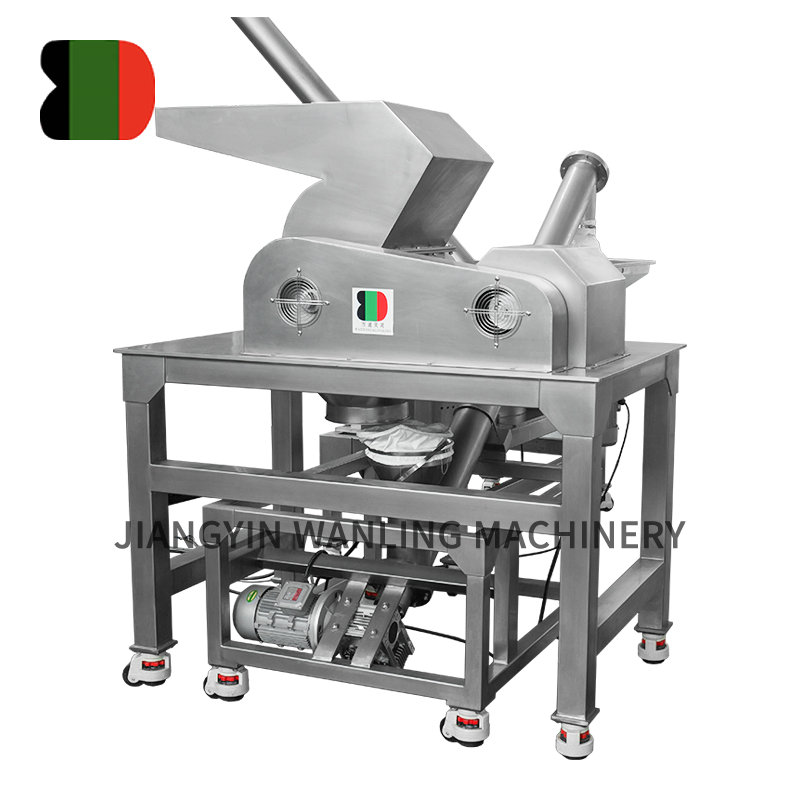
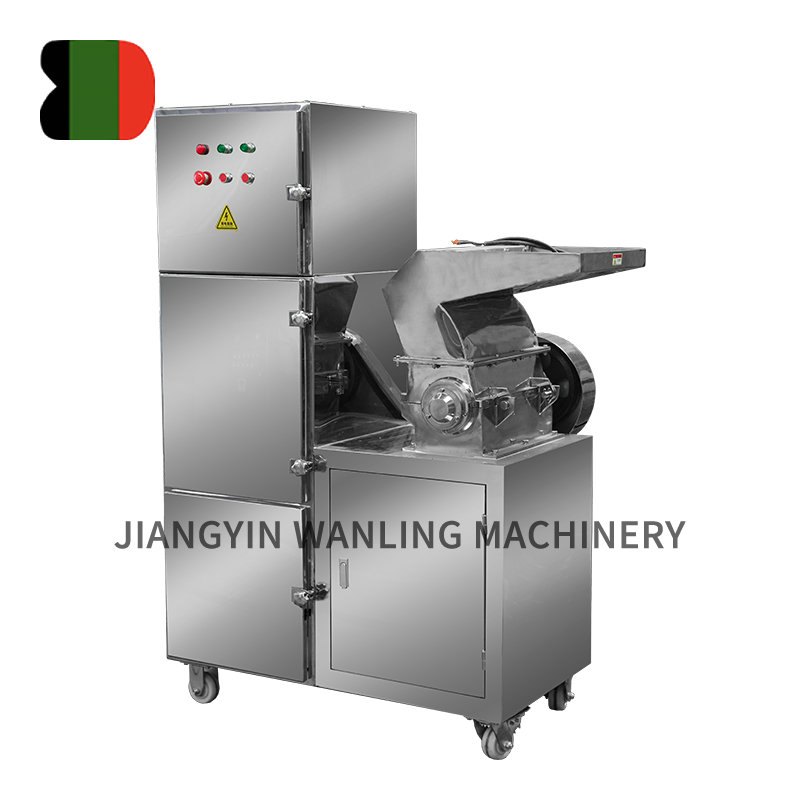
A low temperature spice cryogenic mill is a specialized grinding system that uses liquid nitrogen (LN₂) or liquid carbon dioxide (CO₂) to cool spices to extremely low temperatures — typically between −40°C and −120°C — immediately before and during the milling process. At these temperatures, spice particles become brittle and fracture cleanly under mechanical force, producing fine, uniform powder without the thermal damage that conventional ambient-temperature mills generate. The result is a ground spice that retains its original essential oil content, color intensity, and volatile aromatic compounds far more completely than product ground by standard pin mills, hammer mills, or disc mills.
The technology is not new — cryogenic size reduction has been used in the plastics, rubber, and pharmaceutical industries for decades — but its application to food processing, and specifically to spice grinding, has expanded significantly as manufacturers face growing pressure from buyers who demand ground spices with organoleptic quality closer to freshly cracked whole spice. For pepper, cardamom, cinnamon, turmeric, chili, cumin, and other high-value aromatic spices, cryogenic milling is increasingly the standard of choice among premium and industrial producers alike.
Why Conventional Spice Grinding Damages Quality
To understand what cryogenic milling solves, it is important to understand what conventional grinding does to spices. In a standard ambient milling process, the mechanical energy applied by grinding elements — whether hammers, pins, rollers, or discs — converts into heat at the point of particle contact. Spice particles are poor thermal conductors, so this heat accumulates rapidly at the surface and within the cell structure of the material being ground.
The consequences of this heat generation are measurable and commercially significant:
- Essential oil loss: The volatile aromatic compounds responsible for spice flavor and fragrance — terpenes, aldehydes, esters, and phenols — have low boiling points. Even a modest temperature rise during grinding drives these compounds out of the particle, reducing the essential oil content of the finished powder by 15–40% compared to the starting material.
- Color degradation: Heat accelerates oxidation of pigments such as capsanthin in chili and curcumin in turmeric, resulting in a dull, faded powder that scores lower on colorimetric tests and loses shelf-life stability.
- Microbial activation: Warm grinding conditions create a microenvironment conducive to microbial growth, particularly in spices with residual moisture. This increases the risk of elevated total plate counts in the finished product.
- Caking and agglomeration: Heat softens the natural fats and resins in spices such as nutmeg, clove, and coriander, causing particles to agglomerate and stick together. The resulting powder has poor flowability and requires additional anti-caking treatment.
- Coarser particle size distribution: Many spices become rubbery or fibrous when warm, resisting clean fracture and producing an irregular, wide particle size distribution rather than the narrow, uniform distribution that spice blenders and seasoning manufacturers require.
How the Cryogenic Milling Process Works Step by Step
A low temperature spice cryogenic mill integrates refrigerant injection, pre-cooling, and controlled mechanical grinding into a continuous or batch process. The sequence is designed to ensure that spice material reaches and maintains the target cryogenic temperature throughout the entire grinding event.
Pre-Cooling Stage
Whole or coarsely broken spice is fed into a pre-cooling screw conveyor or tunnel where liquid nitrogen is injected and vaporized. The expanding nitrogen absorbs heat from the spice, dropping its temperature to the target range within seconds. This stage is critical because it ensures the material entering the mill is already embrittled, minimizing the heat of grinding required to achieve the target particle size. Pre-cooling time and LN₂ dosing rate are controlled automatically based on feed rate, moisture content, and target outlet temperature.
Cryogenic Grinding Stage
The pre-cooled spice enters the grinding chamber — typically an impact mill (pin mill or hammer mill) or an air-classifying mill designed for cryogenic operation. The mill body and internal components are insulated and may be continuously purged with cold nitrogen gas to maintain the low-temperature atmosphere inside the grinding zone. Because the spice is brittle, it shatters under impact rather than deforming, producing clean particle fracture at finer sizes with less energy input than ambient grinding requires.
Classification and Collection
Ground particles are carried by the nitrogen gas stream to an integrated classifier — either a mechanical air classifier or a cyclone separator — where oversized particles are returned for regrinding and on-specification particles are directed to a collection hopper or bag filter. The nitrogen atmosphere in the collection system prevents oxidation of freshly exposed particle surfaces until the product is transferred to sealed packaging. The collected powder is then checked for particle size distribution, moisture content, and essential oil content before release.
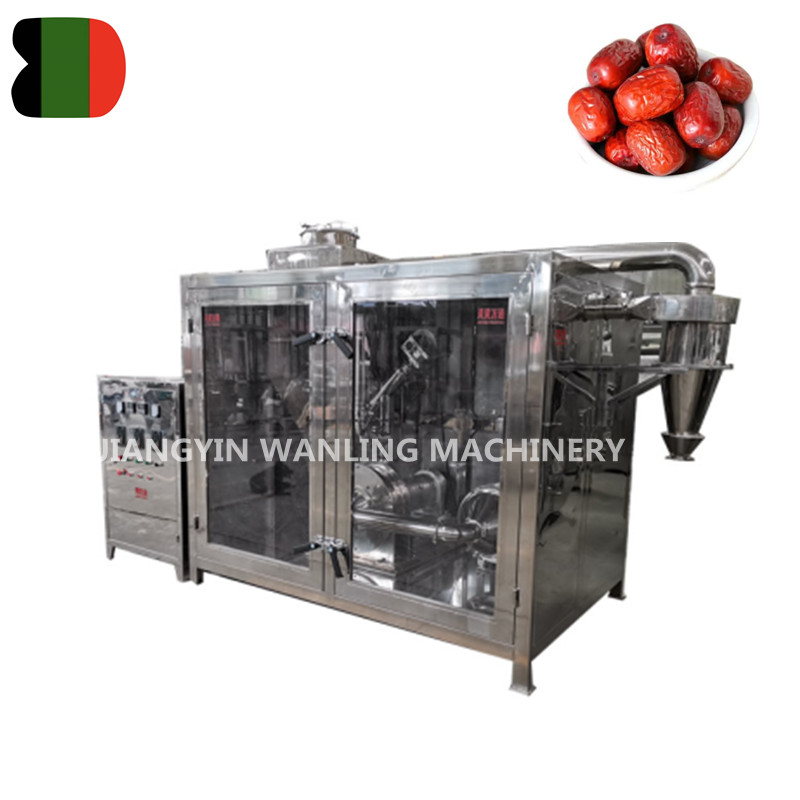
Performance Comparison: Cryogenic vs. Ambient Spice Milling
The quality advantages of cryogenic milling over conventional ambient milling are consistently documented across multiple spice types. The following table summarizes typical performance differences for commonly processed spices:
| Spice | Essential Oil Retention (Cryo vs. Ambient) | Particle Size Achievable | Color Score Improvement |
| Black Pepper | Up to 30% higher | D90 < 150 µm | Moderate improvement |
| Chili / Paprika | 15–25% higher | D90 < 200 µm | Significant (ASTA color retained) |
| Turmeric | 20–35% higher curcumin | D90 < 100 µm | High (vivid yellow preserved) |
| Cardamom | Up to 40% higher | D90 < 250 µm | Moderate |
| Cumin | 25–35% higher | D90 < 180 µm | Moderate improvement |
Key Equipment Specifications to Evaluate
Selecting the right cryogenic mill for a spice processing operation requires careful evaluation of several technical parameters. Not all cryogenic mills are equally suited for food-grade spice applications, and the wrong specification can result in excessive nitrogen consumption, inadequate particle size control, or hygiene compliance issues.
- Operating temperature range: The system should reliably achieve and hold temperatures between −40°C and −120°C depending on the spice being processed. Systems with programmable temperature control allow operators to optimize nitrogen use for different spice varieties.
- LN₂ consumption rate: Liquid nitrogen is the primary operating cost in cryogenic milling. Efficient systems consume 0.3–0.8 kg of LN₂ per kg of spice processed. Systems with heat-exchange pre-coolers that recover cold from exhaust nitrogen significantly reduce consumption.
- Classifier type and adjustability: A built-in air classifier with variable speed allows real-time adjustment of the D50 and D90 particle size cutpoints without stopping the mill. This is essential for operations that process multiple spice specifications on the same line.
- Food-grade construction: All product-contact surfaces should be manufactured from 304 or 316L stainless steel, with smooth internal finishes (Ra ≤ 0.8 µm) and crevice-free welded joints that comply with food safety standards such as EHEDG or 3-A Sanitary Standards.
- Oxygen monitoring and safety systems: Liquid nitrogen displaces oxygen in the grinding environment. The system must include continuous O₂ monitoring in the working area, automatic nitrogen shutoff on low-O₂ detection, and ventilation interlocks to protect operators.
- Throughput capacity: Cryogenic mills for spice processing are available in capacities from 50 kg/h (laboratory and small-batch systems) to 2,000+ kg/h (industrial continuous systems). Matching throughput to production schedule is essential to justify the capital cost.
Practical Considerations for Implementing Cryogenic Spice Milling
Transitioning from conventional to cryogenic spice milling involves more than purchasing the right equipment. Several operational and logistical factors must be addressed to achieve consistent results and a positive return on investment.
Liquid nitrogen supply and storage is the first practical consideration. A reliable LN₂ supply agreement with a gas supplier, combined with on-site vacuum-insulated storage tanks sized for at least two to three days of production, is essential to avoid process interruptions. The proximity of the facility to LN₂ supply infrastructure affects delivered cost and should be factored into the business case.
Spice moisture content must be controlled before cryogenic milling. High-moisture spices (above 10–12% moisture) can form ice crystals at cryogenic temperatures, which interfere with clean particle fracture and cause downstream moisture release upon warming. Pre-drying to below 8% moisture is recommended for most spice types before introducing them to the cryogenic circuit.
Operator training on cryogenic safety is non-negotiable. The asphyxiation hazard from nitrogen gas accumulation in enclosed spaces, the cryogenic burn risk from LN₂ contact with skin, and the pressure hazards associated with cryogenic storage require dedicated safety training and appropriate personal protective equipment (PPE) protocols for all personnel working near the system.
Finally, product validation testing should be conducted for each spice variety processed on the new system. Key tests include essential oil content by hydrodistillation or GC analysis, particle size distribution by laser diffraction, color value by spectrophotometry, and microbiological plate counts. These results establish the quality baseline and confirm that the cryogenic process is delivering the expected improvements over the previous ambient grinding method.
When Cryogenic Milling Delivers the Best Return
Cryogenic milling carries a higher capital cost and ongoing LN₂ operating expense compared to conventional grinding. The investment is most justified — and payback periods shortest — in the following scenarios: processing high-value aromatic spices where essential oil content directly determines the selling price; producing spice powders for the flavoring, extract, and oleoresin industry where purity and volatile retention are specification requirements; grinding heat-sensitive spice blends that contain ingredients such as garlic, onion, or herb powders that degrade rapidly at elevated temperatures; and supplying premium retail or food service customers who test incoming ground spice for color and aroma against defined specifications. For commodity spice grinding where price per kilogram is the only competitive variable, conventional milling may remain more cost-effective — but for quality-driven spice processing, the low temperature cryogenic mill represents the clearest available path to a demonstrably superior finished product.