

 Español
Content
Introduction to Industrial Drying Methods
Drying is a critical process in pharmaceutical, chemical, and food manufacturing. Selecting the right drying equipment affects product quality, energy efficiency, and operational cost. Among the most common industrial dryers are fluid bed dryers and tray dryers. Each offers distinct advantages and limitations depending on the material, process requirements, and desired throughput. Understanding their differences helps manufacturers optimize productivity while maintaining consistent product characteristics.
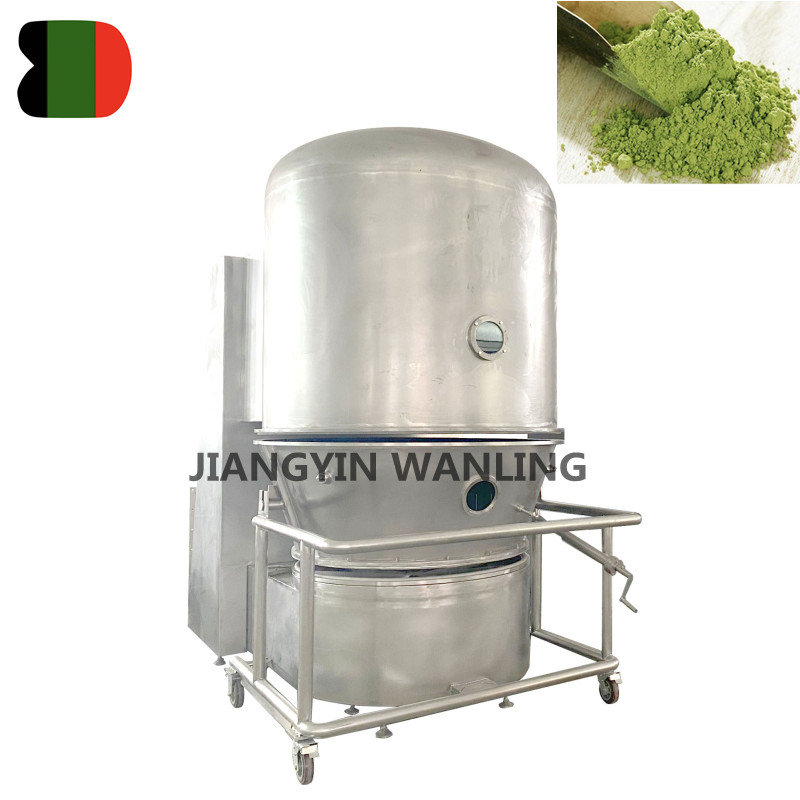
How a Fluid Bed Dryer Works
Fluid bed dryers operate by passing heated air through a perforated bed of particles. The air fluidizes the particles, suspending them in a flow that promotes efficient heat and mass transfer. This fluidization ensures rapid and uniform drying, making the equipment ideal for granules, powders, and small particulate materials. Modern fluid bed dryers often include features such as exhaust air filtration, temperature and airflow control, and integrated spray systems for coating or granulation.
How a Tray Dryer Works
Tray dryers consist of stacked trays placed in a heated chamber where hot air circulates around the product. The material is spread evenly on each tray, and drying occurs via conduction and convection. Tray dryers are simple in design, suitable for batch processing, and ideal for materials that are sensitive to mechanical stress or require gentle handling. Airflow and temperature must be carefully controlled to prevent uneven drying or degradation.
Key Differences Between Fluid Bed and Tray Dryers
| Feature | Fluid Bed Dryer | Tray Dryer |
|---|---|---|
| Drying Mechanism | Fluidization of particles with hot air | Conduction and convection on stacked trays |
| Drying Time | Rapid, due to efficient heat and mass transfer | Slower, batch-dependent |
| Suitable Materials | Small granules, powders, coated particles | Delicate materials, slices, sheets, high-moisture content products |
| Batch vs Continuous | Can be continuous or batch | Primarily batch |
| Energy Efficiency | Higher, due to uniform airflow and rapid drying | Lower, heat retention varies between trays |
Advantages and Limitations
Fluid Bed Dryer Advantages
- Fast and uniform drying due to fluidization
- Excellent for continuous production
- Enhanced particle coating and granulation capabilities
- High energy efficiency and consistent product quality
Fluid Bed Dryer Limitations
- Higher initial investment cost
- Not suitable for very large or sticky particles
- Requires careful air and temperature control
Tray Dryer Advantages
- Simple design, easy to operate
- Gentle drying for delicate materials
- Lower equipment cost and maintenance
- Can handle large or bulky product pieces
Tray Dryer Limitations
- Slower drying process
- Batch operation limits throughput
- Uneven drying if airflow is not properly managed
Choosing the Right Dryer for Your Process
Selecting between a fluid bed dryer and a tray dryer depends on several factors, including:
- Material characteristics: particle size, shape, moisture content, and fragility
- Required throughput and batch size
- Energy consumption and operational efficiency targets
- Space availability and installation requirements
- Budget considerations and long-term maintenance costs
For high-volume granular or powder processing, a fluid bed dryer offers superior speed and uniformity. For delicate, large, or irregularly shaped products, a tray dryer may provide gentler handling and simpler operation.
Conclusion
Both fluid bed dryers and tray dryers have specific strengths and limitations. Understanding the differences in mechanism, efficiency, and product suitability allows manufacturers to select the dryer that best meets their process requirements. By carefully evaluating the material characteristics, production volume, and energy efficiency needs, companies can achieve optimal drying performance, maintain product quality, and reduce operational costs.