

 Español
Content
Introduction to Tray Dryers
Tray dryers are widely used industrial drying machines designed for drying powders, granules, liquids, and heat-sensitive materials. They offer uniform heat distribution, controlled drying conditions, and flexibility for different batch sizes. Selecting the right tray dryer is critical for achieving consistent product quality, energy efficiency, and operational reliability across food, pharmaceutical, chemical, and laboratory applications.
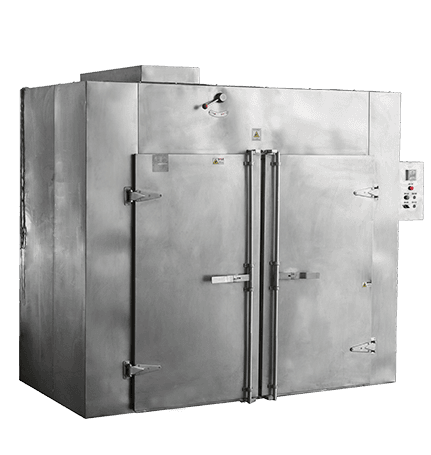
Understanding Tray Dryer Types
Tray dryers come in various configurations, each suited to specific materials and processing requirements. Knowing the differences between types helps optimize drying efficiency and product quality.
Conventional Tray Dryers
Conventional tray dryers use heated air circulated through trays to remove moisture from the material. They are simple, cost-effective, and suitable for small to medium batches. Materials are placed on removable trays, which allows easy loading, unloading, and cleaning.
Vacuum Tray Dryers
Vacuum tray dryers operate under reduced pressure, lowering the boiling point of moisture. This method is ideal for heat-sensitive materials such as pharmaceuticals, herbs, and certain chemicals. Vacuum drying prevents oxidation, preserves color, and reduces thermal degradation.
Fluidized Tray Dryers
Fluidized tray dryers use air or gas to create a fluid-like motion of the material on the tray. This enhances heat and mass transfer, resulting in faster drying times and uniform moisture removal. They are particularly suitable for fine powders and granular materials.
Key Factors to Consider When Selecting a Tray Dryer
Choosing the appropriate tray dryer requires evaluating several technical and operational factors to ensure the equipment meets production and product quality requirements.
Material Characteristics
Consider the physical and chemical properties of the material, including moisture content, heat sensitivity, particle size, and flowability. Heat-sensitive or hygroscopic materials require low-temperature or vacuum drying, while bulk powders and granules can tolerate conventional tray drying.
Batch Size and Capacity
Tray dryers are available in various capacities, ranging from laboratory-scale units to large industrial models. Accurately estimating batch size ensures efficient drying cycles, prevents overloading, and optimizes energy usage.
Temperature and Airflow Control
Precise temperature and airflow control are essential for uniform drying and product integrity. High-performance tray dryers provide adjustable heaters, fans, and vents, allowing customization of drying conditions based on material requirements.
Energy Efficiency
Energy consumption is a significant consideration in selecting tray dryers. Modern models feature insulated chambers, efficient fans, and programmable controls to minimize energy usage while maintaining consistent drying performance.
Ease of Maintenance and Cleaning
Tray dryers with removable trays, accessible doors, and corrosion-resistant materials simplify maintenance and cleaning. Easy maintenance reduces downtime, ensures hygiene, and extends the lifespan of the equipment, which is particularly important in pharmaceutical and food applications.
Comparison of Tray Dryer Types
The following table summarizes key characteristics and applications of different tray dryer types:
| Type | Key Features | Best Applications | Advantages |
| Conventional | Heated air, removable trays, simple controls | Bulk powders, grains, general chemicals | Cost-effective, easy to operate |
| Vacuum | Reduced pressure, low-temperature drying | Pharmaceuticals, heat-sensitive materials | Preserves quality, prevents oxidation |
| Fluidized | Air or gas flow, fluid-like material motion | Fine powders, granular materials | Faster drying, uniform moisture removal |
Maintenance and Safety Considerations
Proper maintenance and adherence to safety protocols ensure optimal performance and longevity of tray dryers. Regular inspection of heaters, fans, and trays prevents malfunction and maintains consistent drying conditions. Use heat-resistant gloves and follow manufacturer safety instructions to avoid accidents during operation.
Conclusion
Selecting the right tray dryer requires careful evaluation of material properties, batch size, drying requirements, energy efficiency, and maintenance considerations. By understanding the differences between conventional, vacuum, and fluidized tray dryers, operators can choose the most suitable equipment for their specific application. Proper selection ensures consistent product quality, operational efficiency, and long-term reliability across a wide range of industrial and laboratory operations.